Introduction
A nerve conduction study is a simple test that checks how well your nerves work. Doctors use it to find nerve problems, such as neuropathy. Because nerves help your body send signals, this test is important for finding out why you may have numbness, tingling, or weakness. If you are looking for a “nerve conduction study near me,” this guide will help you understand what to expect from a nerve conduction study.
What is a Nerve Conduction Study?
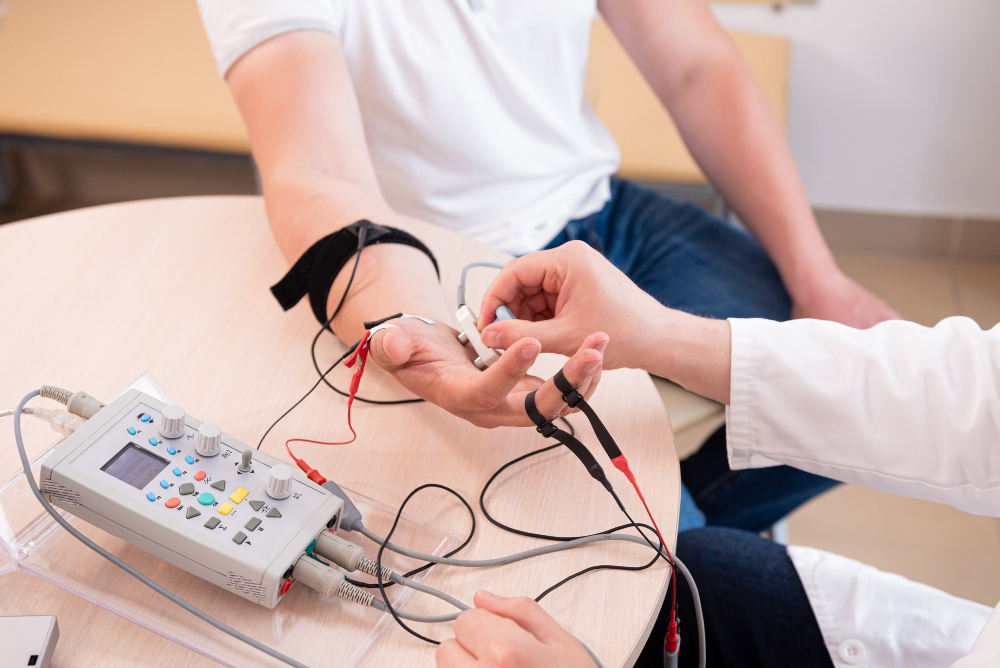
A nerve conduction study, or NCS, measures how fast and strong signals travel through your nerves. During the test, small patches called electrodes are placed on your skin. These patches send mild electrical pulses to your nerves. The test records how your nerves respond. Because it is quick and safe, doctors often use it to check for nerve damage.
Why is a Nerve Conduction Study Done?
Doctors order a nerve conduction study when you have symptoms that may be caused by nerve problems. For example, you may need this test if you have:
Common conditions checked with an NCS test include:
Because the test helps find the cause of your symptoms, it can guide your treatment plan.
How is a Nerve Conduction Study Performed?
During a nerve conduction study, a trained technician or doctor will follow these steps:
Because the test is quick, it usually takes 30 to 60 minutes.
What to Expect Before, During, and After the Test
Before the Test
Before your nerve conduction study, you do not need to do much. However, you should:
During the Test
During the test, you may feel a quick, mild tingling or twitching. This feeling is brief and not harmful. Most people find the test easy to handle. If you feel worried, let the technician know.
After the Test
After the nerve conduction study, you can return to your normal activities right away. There are no lasting side effects. Because the test is safe, you do not need to rest or recover.
Risks and Safety Information
A nerve conduction study is very safe. The electrical pulses used are mild and do not cause harm. Some people may feel slight discomfort during the test, but this goes away quickly. Serious risks are rare. According to the Centers for Disease Control and Prevention (CDC), nerve conduction studies are safe for most people. However, if you have a pacemaker or other implanted device, tell your doctor before the test.
How to Prepare for a Nerve Conduction Study
Preparing for a nerve conduction study is simple. To help the test go smoothly, follow these tips:
Because the test is not affected by eating or drinking, you can eat as usual.
Understanding Your Results
After the test, your doctor will review the results. The nerve conduction study shows how fast and strong your nerves send signals. If the signals are slow or weak, this may mean you have nerve damage. Your doctor will explain what the results mean for you. Sometimes, you may need more tests, such as an EMG (electromyography), to get a full picture of your nerve health.
Frequently Asked Questions
Conclusion
A nerve conduction study is a safe and helpful test for finding nerve problems. Because it is quick and easy, many people have it done every year. If you have symptoms like numbness or weakness, talk to your doctor. Consult Dr Sameep Koshti for personalized advice about nerve conduction studies.